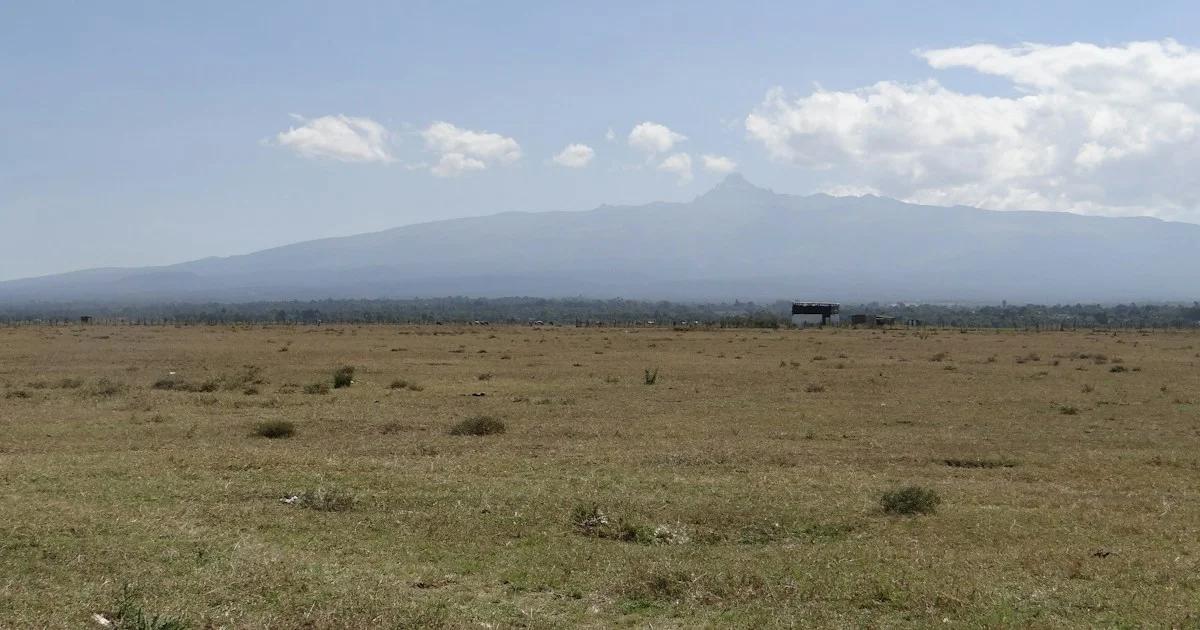
Land vs investing in Kenya used to be a short conversation: buy the plot, wait, get rich. Then Business Daily ran this headline on 4 August 2026: "Homes, land price boom in Nairobi outskirts ends." HassConsult's index showed satellite-town land up just 4.3% in the year to March 2026, against 9.93% a year earlier (Business Daily, 4 Aug 2026). In the second quarter, 7 of the 14 satellite towns it tracks went backwards. Today, a 364-day Treasury bill pays about 9.04% a year before tax (October 2026).
This is general information, not financial, tax or legal advice. Rates in this article are indicative and dated (T-bill, MMF and policy rates as of mid-October 2026), and they change at every auction. Check the latest figures with the Central Bank of Kenya, your fund manager's factsheet and KRA, and speak to a qualified adviser and an advocate before you buy land or make a big investment.
Ingredients: Key Takeaways
Land vs Investing in Kenya: The Short Answer
Land in Kenya isn't a bad investment, but it's no longer the automatic winner. On our maths, after stamp duty, legal fees and capital gains tax, a plot must rise about 9.1% to 13.7% a year for 10 years to match today's T-bills, money market funds or infrastructure bonds. Satellite-town land rose 4.3% in the year to March 2026.
That doesn't mean land always loses. Over 2007 to 2025, well-located plots in Nairobi's satellite towns beat every number above. The question is whether the next 10 years will look like the last 17, and whether your plot is one of the ones the index tracks.
This guide is for you if you're a Kenyan working in London, Dallas, Dubai or a Nairobi tech office, and every family call ends with "so, when are you buying land?" We'll take the question seriously, with real numbers on both sides. Here's the route:
- The Shamba Myth: why land carries so much status, and what to say when family pushes.
- The hidden costs: construction drift, fraud, land grabbing and the liquidity trap.
- The math: compounding in T-bills, infrastructure bonds, MMFs and REITs against waiting 10 years for a plot sale, with formulas you can check.
- The modern alternative playbook: how to back Kenya's growth from abroad, keep your money liquid, and buy land safely if you still want to.
If you're new to planning, start with our guide to budgeting for beginners in Africa. Land is a big-ticket decision, and it works best on top of a budget that already has room in it.
The Shamba Myth: Why Buying Land in Kenya vs Investing Feels Like No Contest
In Kenya, a title deed isn't just an asset. It's a statement. Owning a shamba says you've made it, you're responsible, and you haven't forgotten home. For many families, it's the only investment that "counts". Nobody at a family gathering asks about your money market fund balance.
That feeling isn't irrational. It comes from a real track record.
Why the land story became gospel
HassConsult, the Nairobi property firm that publishes Kenya's best-known land price index, found satellite-town land rose about 10.47 times between December 2007 and Q3 2022 (its Q3 2022 report, as reported by Kenyans.co.ke). By Q3 2025, the multiple was 13.23 times, with average satellite-town land at KSh 32.3 million an acre, and Nairobi suburbs were up 7.4 times (HassConsult Q3 2025, via Capital FM/allAfrica, 28 Oct 2025).
On our calculation, that's about 17.3% a year for satellite towns from 2007 to 2022, and about 15.7% a year to 2025. Suburbs come in at about 11.9% a year. If your parents bought in Ruiru, Kitengela or Syokimau in 2008, they genuinely did well. Their advice comes from experience.
Why "buy land" is no longer the default
Three things have changed.
1. Growth has cooled, and some towns have fallen. HassConsult's Q2 2026 index showed suburbs and satellite towns up an average of 1.4% for the quarter, which Business Daily called the slowest in 8 years. Seven of 14 satellite towns fell: Ngong dropped 2.5% (to KSh 34.8 million an acre), Limuru 0.8%, Kiambu 0.6% and Syokimau 0.3% (Kenyans.co.ke, Aug 2026). Ruiru (+4.1%), Thika (+3.8%) and Ruaka (+2.8%) still rose (Capital FM, Aug 2026).
2. The index flatters land a little. Serrari Group's Q2 2026 analysis notes that Hass-type indices are built mainly from advertised asking prices, not completed sales (Serrari Group). They also cover only the 14 satellite towns and 18 suburbs HassConsult chose to track. A random plot two hours from a tarmac road isn't in that average. And every figure is nominal, before inflation, tax and costs.
3. The alternatives now pay real money. With T-bills near 9% and infrastructure bonds carrying tax-free coupons above 11%, "doing nothing" with cash isn't the choice anymore. The choice is land against a decent, liquid return.
As Sakina Hassanali, Co-CEO of HassConsult, put it in August 2026, growth is "concentrating in locations with strong economic and infrastructure drivers" (Kenyans.co.ke). In other words: location now matters more than the simple act of owning land.
The diaspora angle
Diaspora money is a big part of this story. The Central Bank of Kenya projects remittances of $5.24 billion in 2026, up from $5.04 billion in 2025 (Business Daily). Some of that money may end up in land, but we found no data on how much. If you're earning abroad, you already know the squeeze between your own rent and home's expectations. We break that down in our guide to the japa financial reality.
How to say "not yet" without disrespect (suggestions)
If your family is pushing you to buy a plot, it's often love dressed up as advice. These are suggestions, not scripts you must follow. Adapt the words to your family and your language.
- Lead with agreement: "You're right that I need to build something solid at home. I'm doing it, I've just started with the part that stays liquid."
- Show the plan, not the refusal: "I'm putting money into government infrastructure bonds first. They help fund public projects at home, and I can plan for when the money comes back if someone falls sick."
- Give a timeline: "Once my emergency fund is full, I'll start looking at land properly, with a lawyer and an official search."
- Ask for their knowledge: "Which areas have new roads or jobs coming? I want to buy where the value will grow." This turns pressure into partnership.
- Protect the money: "I'll only pay after the official search and through an advocate. That's how I keep us safe from fraud."
You're not rejecting land. You're sequencing it.
The Hidden Costs of Land: Construction Drift, Fraud, Land Grabbing and Zero Liquidity
The asking price is only the first number. A plot comes with costs going in, costs while you hold it and costs coming out. Many of these don't show up in any index.
Costs going in and coming out
- Stamp duty: 4% of the value in urban and gazetted areas, 2% in rural areas, per law firm CMS and the Chambers Real Estate 2026 guide (CMS Law). The list of areas that count as urban can change, so confirm with the land registry.
- Legal fees: set by the Advocates (Remuneration) Order 2014 scale. A 2018 court taxation applied 2% on the first KSh 5 million (Kenya Law, Kimani Richu & Associates v Centurion Holdings, 2018). Treat that as a guide only and ask your advocate for a written quote.
- Official land search: a small fee paid on Ardhisasa. Sources quote different amounts, so check the current fee on the portal.
- Capital gains tax when you sell: 15% of the net gain, up from 5% in January 2023 (Business Daily). Exemptions exist, but sources disagree on the details, so ask a tax adviser.
- Holding costs: land rates, fencing, a caretaker, security, survey and valuation. We found no reliable national figures, so we've left them out of our maths. That makes our land numbers a best case.
If you plan to build and rent out from abroad, note one more: the Finance Act 2026 (assented 23 June 2026; most measures start 1 July 2026) introduced a 30% final tax on gross rent for non-residents earning rent from Kenyan property, according to summaries by KPMG and EY. Confirm how it applies to you with KRA or a tax adviser.
Construction drift
Construction drift is what happens when the house you're paying for from abroad grows slower, smaller or more expensive than planned. Some of it is just prices. The Kenya National Bureau of Statistics reported that its Construction Input Price Index rose 5.73% in Q2 2026 alone, with the building cost index up 5.25% (KNBS via Kenyans.co.ke).
Some of it is worse. The Nation has documented diaspora Kenyans who handed construction to relatives and found projects never started or poorly done. One US-based man paid for land in Juja and six months of construction, then found nothing on the ground (Nation, "Pain of sweating abroad, milked dry by kin back home"). There's no systematic data on how often this happens. But if you've been abroad for a few years, you've probably heard a version of this story.
Management fraud and fake titles
We found no national count of fraudulent titles or total losses. What exists is a steady run of cases:
- In April 2025, The Standard reported that the DCI had exposed a syndicate allegedly involving Ministry of Lands staff, police and brokers (The Standard).
- In April 2026, a Ruiru couple was held after a fake land sale surfaced at Ardhi House (Dawan Africa).
- In May 2026, the DCI's Land Fraud Investigation Unit arrested a former MP over an alleged scheme linked to a Ngong parcel (The Star, 14 May 2026).
- The Nation has reported courts cancelling fraudulent titles, leaving buyers and banks counting losses (Nation).
- A US Trade Representative report cited fake title deeds and multiple sales of undeveloped land as a barrier to investment in Kenya (Business Daily).
These are examples, not a measure of how common fraud is. The point is simpler: when you buy from abroad, you're relying on paperwork and people you can't easily check.
Land grabbing and disputes
Idle land is the easiest land to take. Squatters, boundary disputes and succession fights can freeze a plot for years. We couldn't find current figures on land-court backlogs or succession cases, so we won't give you a number. What we can say is that a fence, a visible owner and clean records all lower the risk, and each one costs time or money.
Zero liquidity (or close to it)
This is the cost nobody prices. If your mother falls sick or you lose your job abroad, you can't sell a quarter of a plot by Friday.
BuyRentKenya data puts the median time from listing to recorded sale at about 576 days, based on 298 completed sales (BuyRentKenya). That's about 19 months, and it only counts properties that did sell, mostly not raw land. A 91-day T-bill matures in 3 months. Money market funds typically pay out within days, though terms vary by fund, so check yours.
Land is also lumpy. The average quarter-acre in a satellite town was about KSh 8.3 million, per HassConsult data reported by Business Daily. That's roughly $64,000 at the CBK rate of KSh 129.81 per dollar on 15 October 2026 (CBK Weekly Bulletin, 16 Oct 2026). You can't put in a little more each month, and you can't take a little out.
The Math: T-Bills, Infrastructure Bonds, MMFs and REITs vs Waiting 10 Years for a Plot Sale
Here's the test most land-vs-investing debates skip: how fast must your plot grow, after costs and tax, just to match a boring, liquid alternative?
Today's rates (indicative, mid-October 2026)
- Central Bank Rate: 8.75%, held at the MPC meeting of 7 October 2026 (CBK MPC press release).
- Inflation: 6.8% in September 2026, the highest in a year (KNBS, via Nairametrics, 30 Sep 2026).
- T-bills: about 8.75% (91-day), 8.86% (182-day) and 9.04% (364-day), average accepted rates at the 8 and 15 October auctions, as reported by Serrari Group. Interest carries 15% withholding tax.
- Money market funds: an average of 9.3% after fees across 26 funds on 15 October 2026, down from 9.9% a year earlier (Business Daily data, via Rio Times). The spread is wide: on 16 October, Cytonn showed 11.0%, Faulu 10.8%, Lofty-Corban 10.6%, Ziidi 6.2%, Stanbic 5.3% and Equity 4.2%. MMF interest also carries 15% withholding tax.
- Infrastructure bonds: the July to August 2026 reopening offered coupons of 11.75%, 12.667% and 12.737% (Serrari Group). A coupon is not your yield. What you earn depends on the price you pay.
Rate check: these are dated snapshots. Open CBK's latest auction results and your fund's current factsheet before you invest. Yields can and do fall.
The assumptions (read these first)
This is an illustrative model, not a forecast. Here's exactly what we assumed:
- Illustrative outlay: KSh 1,000,000 (about $7,700 at the CBK rate above), held for 10 years, all in nominal shillings.
- Land buying costs: 4% stamp duty plus 2% legal fees plus a KSh 1,000 search fee, about 6.1% in total. The 2% legal fee is an illustrative figure from the 2014 scale, and the search fee is the higher of the amounts sources quote. VAT and other disbursements are ignored.
- Land selling costs: 15% CGT on the gain, with the purchase price (excluding costs) as the base. Agent fees, seller's legal fees and every holding cost are set to zero. That makes every land figure below a floor on what land must earn. Real break-evens are higher.
- Financial assets: today's rate held flat for 10 years and reinvested, with 15% withholding tax taken off where it applies. Rates won't actually stay flat.
- Average MMF: we treated the 9.3% average as gross and taxed it, because the source doesn't say.
- Infrastructure bond: the lowest 2026 coupon (11.75%) used as a stand-in for yield, untaxed, since CBK prospectuses describe infrastructure bonds as tax-free. Your actual yield will differ.
The formulas
- Net land value bought: V0 = 1,000,000 / 1.061 = KSh 942,507
- Sale price after 10 years: S = V0 x (1 + g)^10, where g is yearly land growth
- Cash in hand after CGT: N = 0.85 x S + 0.15 x V0
- Financial asset ending value: T = 1,000,000 x (1 + net rate)^10, where net rate = gross rate x 0.85 (or the full rate if tax-free)
- Break-even sale price: S = (T - 0.15 x V0) / 0.85
- Break-even land growth: g = (S / V0)^(1/10) - 1
Worked line, 364-day T-bill: net rate = 9.04% x 0.85 = 7.68%. T = 1,000,000 x 1.0768^10 = about KSh 2,096,000. S = (2,096,000 - 141,376) / 0.85 = about KSh 2,299,000. S / V0 = 2.44. g = 2.44^0.1 - 1 = about 9.3% a year.
The break-even table
| Option (illustrative KSh 1M, 10 years) | Gross rate used | Net yearly | Ending value | Land must grow at least |
|---|---|---|---|---|
| 91-day T-bill, rolled | 8.75% | 7.44% | about KSh 2.05M | about 9.1% a year |
| 364-day T-bill, rolled | 9.04% | 7.68% | about KSh 2.10M | about 9.3% a year |
| Average MMF | 9.3% | 7.9% | about KSh 2.14M | about 9.6% a year |
| Top MMF (Cytonn, 16 Oct) | 11.0% | 9.35% | about KSh 2.44M | about 11.1% a year |
| Infrastructure bond (11.75% coupon as proxy) | 11.75% | 11.75% (tax-free) | about KSh 3.04M | about 13.7% a year |
Our calculations from the rates above. Rates are indicative as of mid-October 2026 and assumed flat; land costs are floors. Not a forecast.
Now compare with what land actually did
Here's what the same plot would leave you after CGT at different growth rates (our arithmetic, same assumptions):
| Land growth scenario | Where the rate comes from | Cash after 10 years and CGT |
|---|---|---|
| 4.3% a year | Satellite towns, year to March 2026 | about KSh 1.36M |
| 6.6% a year | Satellite towns, year to Sept 2025 | about KSh 1.66M |
| 11.9% a year | Nairobi suburbs, 2007 to 2025 average | about KSh 2.61M |
| 15.7% a year | Satellite towns, 2007 to 2025 average | about KSh 3.59M |
So both sides have a case:
- If land repeats its long-run record, satellite-town land at about 15.7% a year beats every option in the table, even the tax-free bond. Suburbs at 11.9% beat T-bills and MMFs, but not the bond.
- If land grows at its recent pace, it trails every option, including the lowest-yielding T-bill, and you've given up liquidity for 10 years.
The honest takeaway: land now has to be well chosen to win. In our model, buying "any plot" and waiting no longer clears the bar by default, once you count costs.
Why neither side's numbers are guaranteed
- Rates move. Average MMF yields fell from 9.9% to 9.3% in a year. If the CBK keeps cutting, T-bill and MMF returns drop, and the break-evens fall with them.
- Tax treatment can change. The infrastructure bond exemption was challenged by a 2020 Tax Laws (Amendment) Bill proposal (Business Daily). It's still described as in place, but check the current prospectus.
- Inflation eats both. At 6.8% inflation, a 7.44% net T-bill return leaves a thin real gain. Recent land growth of 4.3% would have been below that inflation reading, though the periods differ.
- Currency risk for the diaspora. If you earn in pounds or dollars, every shilling asset (land or bonds) carries exchange-rate risk. We haven't modelled it.
- What about REITs? We left them out of the table on purpose. Current data doesn't support calling Kenya's I-REITs a high-yield option (more on that below).
Run your own numbers
Plug the net rate (gross rate x 0.85, or the full rate for a tax-free bond) into the calculator below with your own amount and timeline. Then use the break-even formula above to see what your plot would need to do.
Free Newsletter
Get the weekly Money Recipe
Practical money guidance for the Africa & diaspora community. No spam.
The Modern Alternative Playbook: Invest in Home Infrastructure While Keeping Liquidity
Here's a reframe that might help with family, and with yourself. You can still build at home. Infrastructure bonds are government bonds issued to fund public infrastructure projects in Kenya. Your money stays in Kenya, works for Kenya, and pays you, and you know when it's due back.
The idea is a liquid core first, land second. These are steps to consider, not personal advice.
Step 1: Fill an emergency fund in a money market fund
Before you lock anything away, keep 3 to 6 months of expenses somewhere you can reach quickly. A shilling money market fund is a common home for this. Pick on net yield, fees and how fast withdrawals arrive, not the headline number: yields ranged from 4.2% to 11.0% across funds in mid-October 2026. Our guide to the best money market funds in Kenya walks through how to compare them and invest from abroad.
Step 2: Use T-bills for money you'll need within a year
T-bills mature in 91, 182 or 364 days, so they suit money earmarked for school fees, a December visit or a future land deposit. You can buy them through CBK's DhowCSD platform. When it launched, the CBK governor said diaspora investors would no longer need to visit CBK in person to open an account (as reported by Business Daily and ITWeb). Check the current account requirements and minimums on DhowCSD itself.
Step 3: Use infrastructure bonds for long-term money
For money you won't touch for years, infrastructure bonds are the closest thing to "building at home" without the title-deed risk. At the July to August 2026 reopening, the minimum was KSh 50,000 for non-competitive bids and KSh 2 million for competitive bids per CDS account (money254).
CBK prospectuses describe infrastructure bonds as tax-free under the Income Tax Act. Read the current prospectus to confirm before each purchase, because that exemption has been challenged before. And remember that long bonds can lose value on paper if rates rise and you need to sell early. We compare the after-tax numbers in detail in infrastructure bonds vs treasury bills in Kenya.
Step 4: Treat REITs as property exposure, not income
REITs sound like the perfect bridge: property returns without a plot. Current data says be careful. Laptrust Imara I-REIT's annualised rental yield fell to 4.4% in the first half of 2026, from 8.1%, as rental income dropped 49.6% (Cytonn H1 2026 earnings note). ILAM Fahari I-REIT left the NSE main segment in February 2024, now trades on the Unquoted Securities Platform, and paid no interim distribution for H1 2026 (Cytonn). We couldn't find current figures for Acorn's REITs.
The Finance Act 2026 does exempt property transfers into KRA-registered REITs from CGT, according to law firm ENS. That helps REIT managers, but it doesn't change the yield you get today. Treat REITs as illiquid with uncertain pricing.
Step 5: Keep a budget line for family, separate from investing
If family support keeps raiding your investments, it needs its own line. Our guide on how to save money in Africa covers practical ways to handle family obligations without draining your savings.
Still want land? A diaspora due-diligence checklist
If you've built your core and still want a plot, good. Do it properly:
- Get the title or LR number first. No number, no deal.
- Run an official search yourself. On Ardhisasa, register, go to Land Search, then Official Land Search, enter the title number, pay and download the digitally signed certificate. It shows the owner, size, charges and cautions (Serrari Group, Ardhisasa explained). If the parcel isn't on Ardhisasa yet, your advocate can do a manual registry search.
- Never pay a relative, broker or agent before the search. Not a deposit, not a "booking fee", not "to hold it for you".
- Hire your own advocate. Not the seller's. Ask them to confirm the seller's identity, check whether Land Control Board consent is needed, and handle stamp duty and transfer.
- Pay in an escrow style. Send money to your advocate's client account, to be released only when agreed conditions are met (for example, a clean search and signed transfer documents). Agree this in writing.
- Avoid giving one relative full power of attorney. If you must appoint someone, limit what they can sign and involve your advocate.
- Build in stages, if you build. Pay per completed stage, against independent photos or site visits, not in one lump.
- Visit, or send someone neutral. Walk the boundaries, check the beacons and talk to neighbours.
When land still makes sense
Land can be the right call if most of these are true:
- You'll live on it or build a family home you'll actually use.
- The money can stay locked for 10 years or more, without touching your emergency fund.
- The title has passed an official search and your own advocate has done the transfer.
- You have a trusted local presence (or a professional) to protect and manage it.
- The location has the "economic and infrastructure drivers" HassConsult links to growth: jobs, transport and commercial centres.
- You've already built a liquid core, and land is one part of your wealth, not all of it.
Side notes: Nigeria and Ghana (qualitative)
These notes are qualitative only. We didn't gather enough comparable data to run the same maths for Nigeria or Ghana.
- Nigeria: under the Land Use Act, the Governor's consent is needed to transfer land, or the transaction can be void, per law firm Banwo & Ighodalo (Mondaq). A buyer who perfects title first can beat one who didn't, which is the legal root of double-allocation risk. Omo-onile demands are widely reported in Lagos, but we found no reliable figures on how common they are.
- Ghana: non-citizens can't hold freehold land, and leasehold is capped at 50 years (renewable) under section 10 of the Land Act 2020 (Act 1036), per Afriwise. That matters if you hold another passport. Much of Ghana's land is held under customary ownership, and the Lands Commission has warned about multiple sales by families and customary landowners (GNA).
In both countries, the same rule applies: verify title through the official registry and your own lawyer before any money moves.
Best for who: land vs the alternatives
| Option | Liquidity | Tax | Entry cost | Main risk | Best for |
|---|---|---|---|---|---|
| Land | Very low (median about 576 days for property listings that sold) | 4% stamp duty (urban), 15% CGT on sale | Satellite quarter-acre averaged about KSh 8.3M | Fraud, disputes, holding costs, slow sale | 10+ year money, a home you'll use, verified title |
| T-bill | Matures in 91, 182 or 364 days | 15% withholding tax | Check the current minimum on DhowCSD | Lower rates when you roll over | Money needed within a year |
| Infrastructure bond | Long-term; selling early means selling at market price | Described as tax-free in CBK prospectuses (verify) | KSh 50,000 non-competitive (2026 reopening) | Price falls if rates rise; tax policy risk | Long-term money you won't touch |
| Money market fund | Typically days (check fund terms) | 15% withholding tax | Varies by fund | Yields fall with rates; fund-specific risk | Emergency fund, short-term savings |
| I-REIT | Low; Fahari now off the main segment | Check with the fund and KRA | Varies by unit price | Falling rental income, pricing uncertain | Small property exposure, not income |
Rates and minimums are indicative as of October 2026. Confirm with CBK, the fund manager and KRA before investing.
Frequently Asked Questions
Plate It Up: Build Your Liquid Core First, Then Decide on the Plot
Land vs investing in Kenya isn't a fight between tradition and spreadsheets. Land has made many Kenyan families wealthy, and the right plot in the right place can still do it. But the easy 10x era has cooled, the costs are real, and safe, liquid alternatives now pay enough that a random plot has to work hard to beat them.
So sequence it. Fill your emergency fund. Put near-term money in T-bills and long-term money in infrastructure bonds. Then, if land still fits, buy it with cash you can lock for 10 years, after an official search and through your own advocate.
Your next step: open the compound interest calculator, enter your amount at today's net T-bill or bond rate, and write down the ending value. That's the number your plot has to beat. For tax and land law questions, speak to a qualified adviser and an advocate before you commit.
About the Author
The Money Recipe editorial team covers diaspora finance, Kenyan government securities and African property markets for readers at home and abroad. We track CBK auctions, the NSE and Kenya's money market fund data closely, and this guide is built on primary and named sources: the Central Bank of Kenya's October 2026 MPC release and weekly bulletin, KNBS inflation and construction cost data, CBK infrastructure bond prospectuses, HassConsult's land price index (via Business Daily, Kenyans.co.ke and Capital FM), Kenya Law, and Big Four tax summaries of the Finance Act 2026. The break-even and growth-rate figures are our own calculations, shown with formulas and assumptions so you can check them. Where we couldn't verify a figure, such as land holding costs, fraud totals or infrastructure bond accepted yields, we left it out or asked you to check. This article is not financial, tax or legal advice.